The Satellite and Model Data to Inform Solar Radiation Modification Techniques (STATISTICS) project aims to contribute to the integration of climate modelling with Earth observation to inform potential future Solar Radiation Modification assessment, policy and governance.
Current climate policies are expected to lead to a 2.7°C rise in temperature by 2100, which goes beyond the main goal of the Paris Agreement. While reducing greenhouse gas emissions is the top priority, other approaches—like carbon dioxide removal (CDR) and Solar Radiation Modification (SRM) - are receiving growing attention as ways to help limit global warming.
Solar Radiation Modification methods, such as stratospheric aerosol injection, marine cloud brightening, and cirrus cloud thinning, may offer benefits but also carry potential risks. This makes further research critical. To date, most SRM studies rely on climate modelling (e.g. GeoMIP) and make limited use of real-world observations. However, high-resolution satellite data and AI-powered tools could improve our understanding of natural analogues such as volcanic eruptions
Background
Solar Radiation Modification (SRM) has emerged as a potential, yet highly contentious, climate intervention strategy aimed at mitigating global warming. While SRM techniques, such as stratospheric aerosol injection (SAI) and marine cloud brightening (MCB), have been explored primarily through climate modelling, significant gaps remain in understanding their feasibility, risks, and long-term impacts.
The STATISTICS project seeks to bridge these gaps by better integrating satellite-based Earth observations with advanced modelling techniques to improve the accuracy and reliability of SRM assessments. Both scientific and policy-related challenges are addressed to ensure a comprehensive and responsible approach.
One of the primary scientific hurdles is the limited availability of observational constraints for SRM techniques. While climate models provide valuable insights, high-resolution observations to validate key processes is often lacking, especially at injection sites or in regions where SRM effects are expected to be most pronounced. Current observational datasets, such as those derived from ESA Earth Observations missions are underutilised in SRM research.
This project aims to harness these resources to refine models and improve our understanding, while generating new datasets that can reduce uncertainties in climate response simulations.
Currently, no clear governance framework for SRM research exists raising concerns about equity, ethical considerations, and geopolitical risks. This project acknowledges the importance of engaging with international organisations - including the European Commission (EC), UNEP, WCRP - to ensure that research efforts align with broader environmental and governance frameworks.
Furthermore, anticipating future observational needs is essential, especially in the event of unauthoried or uncoordinated SRM deployment. Our project will address the detectability question using radiative transfer calculations and a future ESA mission as an example.
Aims and objectives
The STATISTICS project will conduct targeted investigations across five key areas:
1 Stratospheric Aerosol Injection (SAI) Model Intercomparison and Evaluation
- Comparative analysis of aerosol microphysics and radiative impacts using multiple climate models and satellite data.
- Assess the ability of aerosol models to simulate stratospheric sulphur injections, using moderate volcanic eruptions (e.g., Raikoke and Ulawun, 2019) as analogues.
- Examine key knowledge gaps, such as aerosol particle size distribution (PSD), radiative impacts, and discrepancies in climate model heating rates at injection sites.
2 Marine Cloud Brightening (MCB) and Aerosol-Cloud Interactions
- Investigate aerosol-cloud interactions using natural analogues, such as from a volcanic eruption, to better understand the climatic impacts of MCB.
- Use advanced retrieval techniques (e.g., GRASP algorithm) to analyse aerosol changes from satellite and ground-based observations.
3 Cirrus Cloud Thinning (CCT) and Mixed-Phase Cloud Thinning (MCT)
- Reassess the viability of CCT by reconciling observational studies and climate model results regarding cirrus cloud susceptibility to ice nucleating particle (INP) seeding.
- Investigate potential interactions between SAI particles (e.g., sulphate, alumina, calcite) and cirrus clouds.
- Conduct exploratory modelling studies of MCT, a newly proposed SRM technique targeting mixed-phase clouds.
4 Impact of SAI on Solar Energy Resources
- Analyse how SAI-induced changes in aerosol properties affect surface solar radiation and photovoltaic (PV) energy potential.
- Use satellite and ground-based data to quantify changes in total, diffuse, and spectral solar radiation.
- Assess mitigation strategies, such as optimising PV farm design, to minimise energy losses due to increased atmospheric scattering.
5 Detectability of SRM Field Experiments and Deployment
- Evaluate the technical limitations of current observational capabilities for detecting SRM, based on natural analogues.
- Perform Observing System Simulation Experiments (OSSE) to assess the feasibility of SRM monitoring.
- Contribute to ongoing international efforts aimed at mapping SRM monitoring needs for policy discussions.
Project plan
- Desktop Research – Conduct a literature review to assess the current state of SRM research, identify gaps, and align with IPCC and policy studies.
- Liaison with Ongoing Projects – Engage with CCI and Horizon Europe projects (CERTAINTY, CleanCloud, Co-CREATE) to ensure alignment and maximise synergies.
- Research & Monitoring Gap Analysis – Identify key gaps in knowledge and monitoring based on existing studies and international assessments (e.g., IPCC, UNEP).
- Bridging Modeling & Earth Observation (EO) – Integrate EO data with climate models to refine SRM impact assessments and guide future monitoring.
- Natural & Anthropogenic Analogues – Use data from natural (volcanic eruptions) and anthropogenic sources (industrial emissions) to improve SRM understanding.
- Workshop Organisation – Host a mid-project SRM workshop in June to validate progress, foster collaboration, and refine research.
- Compilation of Existing Datasets – Create a centralised list of SRM-related models and datasets (e.g., GeoMIP, CCI, EUMETSAT).
- Targeted Simulations & Satellite Retrievals – Conduct climate model simulations and EO retrievals to fill critical data gaps.
- Impact & Detectability Assessments – Analyse the impact of SAI on PV energy production, and explore strategies to mitigate negative impacts. Assess SRM detectability using EO instruments (e.g., 3MI, GAPMAP, CAIRT, AOS).
- Synthesis – Summarise findings and exploring AI-driven approaches for merging models and observations and developing climate system digital twins.
The STATISTICS project will generate new modelling and observational dasasets. In particular, it is anticipated new climate model simulations of natural analogues, benchmark radiative transfer model calculations, and satellite retrievals of aerosols and clouds on key regions of interest.
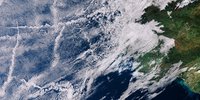
- STATISTICS Multi-instrument space-borne synergy data (Sentinel 3 + Sentinel 5P) for MCB study:
The STATISTICS consortium consists of 7 partners from 4 different ESA member states and is organised as follows:
- Science lead: Dr. Olivier Boucher (CNRS-IPSL), France.
- Project Management: Dr. Chong Li (GRASP SAS), France.
- Earth Observation Science Team: Dr. Oleg Dubovik, Dr Yevgeny Derimian (CNRS-LOA), Dr. Pavel Litvinov (GRASP SAS), Dr. Pasquale Sellitto (CNRS-LISA)
- Climate Modelling Team: led by Dr. Olivier Boucher (CNRS-IPSL), Dr. Ulrike Niemeier (MPI-M), Dr. Trude Storelvmo (UiO), Dr. Timofei Sukhodolov (PMOD).
- Climate Policy Advisory and Research Team: led by Dr. Matthias Honegger (PCR) and François Pougel (PCR)

Project Prime
GRASP SAS (Generalized Retrieval of Aerosol and Surface Properties), France, is the project leader, responsible for the scientific coordination and the technical project management of the project, relations with ESA and communications with relevant scientific communities. GRASP is also leading the atmospheric and surface satellite retrievals and contributing to the study on aerosol-cloud interactions, particularly the MCB within the project.
Consortium partners
CNRS-LOA (Laboratoire d’Optique Atmosphérique), France, is co-leading the Earth Observation Science Team. Furthermore, LOA is together with GRASP responsible for the aerosol retrievals using both satellite and ground-based measurements.
CNRS-IPSL (Institut Pierre-Simon Laplace), France, is leading the Climate Modelling Team. IPSL is responsible for aerosol and climate modelling, as well as modelling of climate intervention techniques. It also contributes to the assessment of detectability using Earth Observing Systems.
MPI-M (Max-Planck Institute for Meteorology), Germany, is contributing to the research on aerosol-cloud interaction, climate modelling of SAI, and the validation and testing against observations.
UiO (University of Oslo), Norway, is contributing to the study of aerosol-cloud interactions, climate modelling related to CCT and MCT, and the validation and testing against observations.
PMOD (Physikalisch-Meteorologisches Observatorium Davos), Switzerland, is contributing to aerosol retrievals from ground-based observations, as well as studies related to PV potential under SAI scenarios.
PCR (Perspectives Climate Research), Switzerland, is leading the Climate Policy Advisory and Research Team, and is responsible for the study of international climate policy and governance aspects of SRM.
Science lead: Dr. Olivier Boucher(CNRS-IPSL), France.
Project Management: Dr. Chong Li(GRASP SAS), France.
ESA Technical Officer: Michael Eisinger
A joint workshop on Solar Radiation Modification (SRM) was organised by ACtIon4Cooling and STATISTICS projects on 𝟭𝟳 𝗝𝘂𝗻𝗲 𝟮𝟬𝟮𝟱 𝗮𝘁 𝗗𝗟𝗥 𝗢𝗯𝗲𝗿𝗽𝗳𝗮𝗳𝗳𝗲𝗻𝗵𝗼𝗳𝗲𝗻 (Germany).
The objectives of the workshop were to:
- Present the work carried out within the ACtIon4Cooling and STATISTICS projects to the SRM community,
- Foster collaboration between the satellite and modelling communities, as well as across a wide range of relevant disciplines,
- Discuss and coordinate ongoing and future efforts in SRM research at the European level,
- Explore, in the broader scope of SRM, how new findings could eventually inform discussions on governance and risk.
Conclusions from the STATISTICS / ACtIon4Cooling workshop on SRM techniques - 17th June 2025
Support for Open-Ended Research
The workshop participants expressed clear support for open-ended research on Solar Radiation Modification (SRM) techniques, particularly through publicly funded mechanisms. Given the deep uncertainties and the high stakes involved with climate mitigation and adaptation, a robust scientific understanding of potential processes, impacts, risks and unintended consequences of SRM must be constrained by neither narrow policy frames nor prematurely operational agendas. Public funding can ensure independence, transparency, and broad stakeholder engagement in setting research priorities. European funding for research explicitly labelled as SRM would build a basis for an independent stance on the topic.
Enhanced Use of Natural Analogues and Existing Observations
Great scientific potential exists in studying natural (and anthropogenic) analogues of SRM, such as explosive volcanic eruptions, low-level degassing volcanoes, changes or variability in traffic (ship) and industry emissions, dust events in the upper troposphere, or contrail cirrus. These opportunities remain underexploited. In particular, satellite datasets—some of which contain relevant but as-yet-unanalysed observations—offer a valuable resource for improving our understanding of aerosol–cloud–radiation interactions. A coordinated effort to mine and integrate such datasets is recommended. In particular, harmonizing assumptions made in models and satellite retrievals would help to better integrate observations and models (e.g. through digital twins). New observing capabilities should also be mobilized.
Field experiments: Clarity of Rationale and Participatory Design Are Crucial
While small-scale field experiments may eventually become necessary to resolve key scientific uncertainties that cannot be addressed by model experiments, natural analogues or laboratory studies alone, their justification and design must be articulated with great clarity. This includes defining specific scientific and/or technical objectives, ensuring transparent public communication, and co-developing experimental plans with a diverse range of stakeholders to maximise legitimacy, scientific and/or technical value, and ethical integrity. An assessment on potential impacts on weather and climate should be provided as part of the planning. It should be noted that field experiments relevant to SRM techniques may also be motivated by process understanding, regardless of SRM objectives.
Improved Observing System with Distinction Between Monitoring and Detection
The current global observing system is insufficient for monitoring key parameters relevant to SRM techniques, especially for Stratospheric Aerosol Injection (SAI), and for detecting SRM experiments below a certain size or uncoordinated deployment. There remain major observational gaps in trace gases, aerosol and cloud properties, vertical distribution, radiative effects, and troposphere-stratosphere coupling. Further risks are associated with the downscaling, or lack of open access availability to European research, of US current and future observing programmes and satellite missions. A dedicated effort is required to document monitoring priorities in order to enhance these capabilities. The ongoing effort to produce long-term homogenised climate datarecords relevant to SRM processes should be continued. Observing systems designed to study natural analogues and assess the impacts of planned field experiments may not necessarily be the same as those needed for early detection and attribution of uncoordinated SRM field experiments or deployment.
Improved Modelling Capabilities for Prediction and Attribution
Earth System Models are improving through resolution increase and more comprehensive representation of aerosol and cloud processes, but different models continue to disagree on some key aspects of the climate response to SRM. Moreover, the predictions at subseasonal, seasonal and decadal scales are insufficient to reliably anticipate the impacts of field experiments and potential deployment. Similarly, it is necessary to establish confidence in counterfactual simulations that would be required to quantify intended and unintended impacts of SRM field experiments or deployment. Research is thus required on how trust in counterfactual simulations may be established. Further model improvements may build on insights from natural analogues and hypothetical future field experiments.